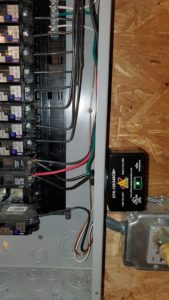
 The 2023 National Electrical Code (NEC) significantly expanded and clarified requirements for surge-protective devices (SPDs). These rules apply not only at services, but also at feeders and distribution equipment supplying certain occupancies. Understanding where, when, and how SPDs are required is critical for code compliance and passing inspections.
This article breaks down the requirements found in NEC 230.67, 215.18, and 225.42.
Why Surge Protection Is Required
Electrical surges can originate from:
- Lightning events
- Utility switching operations
- Large motors or equipment cycling on/off
- Faults within the electrical system itself
Modern buildings contain sensitive electronics such as HVAC controls, appliances, medical devices, and communication equipment, that are easily damaged by transient overvoltages. The 2023 NEC treats surge protection as a baseline safety requirement, not an optional upgrade.
Occupancies That Require Surge Protection
All three code sections apply to the same occupancies:
- Dwelling units (single-family and multifamily)
- Dormitory units
- Guest rooms and guest suites of hotels and motels
- Patient sleeping rooms in nursing homes and limited-care facilities
If you are supplying any of the above, surge protection is mandatory.
NEC 230.67 — Surge Protection at Services
When It Applies
All services supplying the occupancies listed above must have surge protection.
Location
- The SPD must be:
- Integral to the service equipment, or
- Immediately adjacent to the service equipment
Exception:
If an SPD is installed at each next level of downstream distribution equipment toward the load, it does not have to be at the service equipment itself.
Type
- Type 1 or Type 2 SPD only
Rating
- Minimum nominal discharge current (In): 10 kA
Replacement Rule
- If service equipment is replaced, the new installation must comply with 230.67, an SPD is required even if the old service did not have one.
NEC 215.18 — Surge Protection for Feeders (Inside Buildings)
When It Applies
When a feeder supplies distribution equipment serving the listed occupancies, an SPD is required.
Location
- Installed in or adjacent to distribution equipment
- Must be on the load side of the feeder
- That equipment must contain branch-circuit overcurrent devices serving the required areas
Type
- Type 1 or Type 2 SPD
Rating
- Minimum 10 kA In
Replacement Rule
- If the distribution equipment supplied by the feeder is replaced, an SPD must be installed.
Informational Guidance
- Surge protection is most effective when installed closest to the branch circuits
- Surges can originate from inside the building, not just from the utility
NEC 225.42 — Surge Protection for Feeders (Outside Buildings)
This section mirrors 215.18 but applies to outside feeders.
When It Applies
When an outside feeder supplies distribution equipment serving the required occupancies.
Location
- In or adjacent to the distribution equipment
- On the load side of the feeder
- Equipment must supply branch circuits serving the listed areas
Type
- Type 1 or Type 2 SPD
Rating
- Minimum 10 kA In
Replacement Rule
- Replacement of distribution equipment triggers SPD compliance
Additional Informational Note
- Keep SPD conductor leads as short as possible
- Shorter leads reduce let-through voltage, improving protection performance
Practical Takeaways for Electricians
- Surge protection is no longer just a service-level issue
- SPDs may be required at:
- Service equipment
- Interior distribution panels
- Exterior feeder-supplied panels
- Replacing equipment triggers compliance, even in existing buildings
- Only Type 1 or Type 2 SPDs are acceptable
- Minimum rating is 10 kA (In), many inspectors will check the label
- Short, straight conductors matter for SPD effectiveness
Inspection & Installation Tips
- Verify SPD labeling for:
- Type (1 or 2)
- Nominal discharge current rating (≥10 kA)
- Mount SPDs as close as physically possible to the equipment
- Avoid long conductor loops or sharp bends
- Coordinate SPD placement early in the design, especially for feeder panels
- Don’t assume an existing building is exempt if equipment is being replaced
Final Thought
The 2023 NEC treats surge protection as essential system protection, not optional equipment. Electricians who understand where SPDs are required, and install them correctly, will avoid failed inspections, callbacks, and costly rework.
If you are unsure whether a feeder, panel, or service requires surge protection, assume it does and verify early.